
Last year on the night of May 6–7, India did something it had never done before — it struck deep inside Pakistan. Not a warning shot. Not a diplomatic protest. A precise, coordinated military offensive that shook the subcontinent in under half an hour. A year later, the dust has settled, but the consequences are still unfolding.
The Night That Changed Everything
There is a particular kind of silence that falls before something enormous happens. On the evening of May 6, 2025, most Indians had gone to bed without knowing what was coming. They woke up to a different country.
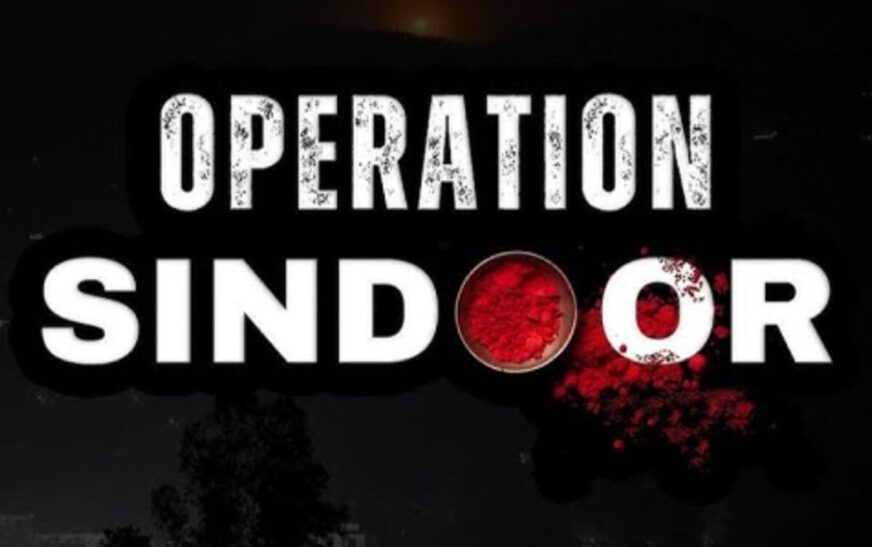
In the early hours of May 7, Indian armed forces launched Operation Sindoor — a coordinated tri-service offensive targeting nine terror infrastructure sites in Pakistan and Pakistan-occupied Kashmir (PoK). The strikes were a direct response to the April 22 Pahalgam massacre, where 26 civilians — mostly Hindu tourists on a holiday — were systematically identified by their religion and shot dead by Pakistan-backed terrorists at the Baisaran meadow in Jammu and Kashmir.
The operation lasted 22 minutes in its opening phase. In those 22 minutes, India crossed a threshold it had long debated but never dared to cross before.
Rafale jets carrying SCALP cruise missiles and HAMMER precision-guided bombs struck deep into Pakistani territory. Targets in Bahawalpur and Muridke — longtime strongholds of Jaish-e-Mohammed (JeM) and Lashkar-e-Taiba (LeT) — were reduced to rubble. Indigenous BrahMos missiles were deployed alongside the French-origin weapons. According to a detailed anniversary breakdown by Business Today, the indigenously developed Akash surface-to-air missile system, alongside the Pechora and OSA-AK platforms, formed a layered defensive grid that successfully intercepted Pakistan’s retaliatory drone waves. The IAF’s Integrated Air Command and Control System enabled real-time coordination throughout the entire operation.
Loitering munitions — sometimes called “suicide drones” — were used at a scale that, according to former Vice Chief of the Air Staff Air Marshal Sujeet Pushpakar Dharkar, represented a global milestone. He noted it was likely the first time long-range surface-to-air weapon systems had been employed this way in the region, and possibly a world record for the range at which a surface-to-air missile kill was achieved.
By the time Pakistan’s military fully understood what was happening, the opening strikes had already bypassed and jammed Pakistani air-defence systems.
What Pahalgam Made Inevitable
To understand Operation Sindoor, you have to go back to April 22, 2025.
The Baisaran meadow attack was different from previous terror strikes in Kashmir. It was not indiscriminate. Survivors reported that the gunmen moved through groups of tourists, asked their names and religion, and shot the Hindus. Twenty-six men died — husbands, fathers, young men on a holiday. Their wives and families watched it unfold in front of them.
The name Operation Sindoor speaks directly to this. Sindoor — the vermillion powder worn by married Hindu women — is traditionally removed when a woman becomes a widow. The name was not accidental. It was a statement of intent.
The attack triggered something that years of accumulated cross-border terrorism had been building toward. Public anger was not just grief — it was a kind of furious clarity. And for the first time, there was a political will in New Delhi to respond with action that went further than anything India had done before — further than the 2016 surgical strikes, further than the 2019 Balakot airstrike.
The Operation: Phase by Phase
Phase 1 — The Opening Strike (Night of May 6–7)
Nine terror targets were hit simultaneously. These included training camps, weapons storage facilities, launchpads, and command-and-control centres directly linked to JeM and LeT. The Indian Ministry of Defence was explicit from the start: the strikes were “focused, measured and non-escalatory” and did not target Pakistani military assets in this phase. The point was to destroy terror infrastructure — not to start a war.
The operation also demonstrated seamless coordination across all three services. While the Air Force executed precision strikes, the Navy maintained a forward presence in the North Arabian Sea, and ground forces remained on high alert along the Line of Control.
Phase 2 — Pakistan’s Retaliation (May 8–9)
Pakistan did not stand down. Over the following two days, it launched drone and UCAV attacks aimed at Indian military installations. Approximately 50 Pakistani drones were neutralised by Indian air defence systems. Pakistan also publicly claimed it had shot down Indian Air Force jets. Some of these claims were disputed; others remained unverified in the fog of a rapidly escalating confrontation.
Phase 3 — India Escalates (May 9–10)
As Pakistani strikes continued, India moved to a second phase: targeting Pakistani airbases, radar stations, and military command infrastructure. Nur Khan, Sargodha, Jacobabad, and Bholari airbases were all hit. The IAF also conducted precision strikes on the Nur Khan Air Base and Rahimyar Khan Air Base, with visual evidence of damage later presented at official briefings. Within 72 hours, according to US urban warfare expert John Spencer, India had achieved air superiority — a remarkable achievement confirmed not by Indian officials but by international observers.
The Ceasefire (May 10)
On May 10, at 15:35 IST, Pakistan’s Director General of Military Operations called his Indian counterpart. At 17:00 IST, a ceasefire came into effect — across land, air, and sea. Pakistan had sought the ceasefire. India had not needed to.
One Year On: What Has Actually Changed?
India’s Security Doctrine Is Written in a Different Language Now
Before Operation Sindoor, there was a long-standing ambiguity in Indian strategic thinking. How far would India go? What would it take? The answers, over decades, had always been: restraint, condemnation, diplomatic pressure.
That ambiguity is gone.
As The Week reported on the eve of the anniversary, defence experts and former military officers who spoke to reporters described the operation as “a watershed moment that reshaped how India views escalation, deterrence, and cross-border threats.” Major General Dhruv C Katoch (Retd.) explained it plainly: the most important change since Operation Sindoor is in how India thinks about terrorism and how it reacts to it. New Delhi has made it clear — through action, not just words — that cross-border terrorism will invite a military response, and that India is prepared to absorb and match whatever escalation follows.
Security analysts are now calling this India’s “new normal.” It is not a posture that was announced in a policy document. It was demonstrated — in real time, at scale, under the eyes of the world.
Alongside the military strikes, India moved simultaneously on the diplomatic front. The Indus Waters Treaty was placed in abeyance — a significant step widely read as signalling a harder long-term stance. Visa services for Pakistani nationals were suspended, and existing visas were revoked from April 27. The message was unmistakable: India’s response to cross-border terrorism would extend well beyond the battlefield.
Military Modernisation Has Moved Faster
Operation Sindoor was a live test of India’s evolving defence capabilities — and the results were watched carefully in Beijing, Washington, Moscow, and Riyadh, not just Islamabad.
What stood out: the combat deployment of Rafale jets, the employment of loitering munitions at unprecedented scale, the real-world performance of BrahMos, the effectiveness of Indian electronic warfare in jamming Pakistani radar, and the coordination between Army, Air Force, intelligence agencies, and cyber warfare units that defence analysts described as noticeably sharper than previous operations.
The numbers followed. India’s military spending rose 8.9% to $92.1 billion in 2025, elevating it to the rank of the world’s fifth-largest military spender, according to SIPRI data published in April 2026. The jump followed Operation Sindoor directly, driving an aggressive procurement drive covering drones, counter-drone systems, air defence platforms, and a wide range of modern hardware. Pakistan’s spending also increased by 11%, to $11.9 billion — but India now outspends it by more than seven to one.
Following the operation, India accelerated investment across multiple defence sectors — indigenous drones, surveillance systems, missile technology, air defence upgrades — all under the Atmanirbhar Bharat initiative. Operation Sindoor turned the argument for self-reliance from theory into lived experience.
The Pilots Nobody Forgot
One of the stories that emerged around the anniversary is that of Squadron Leader Rizwan Malik — a fighter pilot from Manipur’s Imphal East district who flew a Sukhoi Su-30MKI as part of an unescorted strike package into heavily defended Pakistani airspace during the night of the operation. His actions earned him the Vir Chakra, India’s third-highest wartime gallantry award. His story, which became a matter of pride not just in the Northeast but across the country, is a reminder that behind every doctrine is a person who has to carry it out.
China’s Quiet Role
One of the more unsettling revelations to emerge around the anniversary was reporting that China had admitted to providing some form of technical assistance to Pakistan during the conflict. Beijing has not officially confirmed the details, and the full picture remains unclear. But the allegation has stuck — and it has added a new dimension to how India’s security establishment thinks about the challenges it faces.
India has always known it operates in a two-front security environment. Operation Sindoor brought that reality closer. The accelerated military modernisation of the past year cannot be understood purely through the lens of Pakistan. China’s more active regional role is now being factored into Indian defence planning in ways that are more urgent, and more concrete, than before.
Pakistan: Winning the Narrative, Losing the Reality
In Pakistan, the story of Operation Sindoor has been told very differently at home. The Pakistani military’s media wing, ISPR, framed the ceasefire as a victory. The day was called Youm-E-Tashakur — Day of Gratitude. Cultural events, seminars, and social media campaigns have worked hard to institutionalise a story of Pakistani resilience and strength.
But the material facts are harder to reshape. Pakistan sought the ceasefire. Its economy — already fragile — suffered further damage from the confrontation. Islamabad is reportedly seeking international financial assistance, citing heavy losses. And Pakistan’s relations with Afghanistan have deteriorated sharply, following the launch of its Ghazab Lil Haq operations against Afghanistan in early 2026 — straining Islamabad from two directions simultaneously.
The Families of Pahalgam: One Year Without Them
It is easy, in the language of doctrine and deterrence, to lose sight of the 26 men who never came home from Baisaran.
Their families have now lived through a year that no anniversary tribute can repair. The Army released a commemorative video this week. PM Modi changed his X display picture — a gesture quickly mirrored by senior ministers and officials across the diplomatic and political leadership, from External Affairs Minister Jaishankar to Defence Minister Rajnath Singh. Politicians have spoken. Wreaths have been laid. None of it fills the chair at the dinner table.
Operation Sindoor was named in their memory. Whether justice has been served — whether the destruction of a training camp in Bahawalpur means anything to a widow in Patna or Pune — is a question that has no strategic answer. It belongs entirely to the families, and they are the only ones qualified to answer it.
What the Next Crisis Might Look Like
Here is what analysts are saying that most commemorations will not: Operation Sindoor may have changed the rules of engagement, but it has also changed the starting conditions for the next confrontation.
The next India-Pakistan crisis — and most experts believe there will be one — will unfold under different parameters. Compressed timelines, because both sides now understand each other’s opening moves more clearly. Greater domestic pressure, because public expectations on both sides have been reset by what happened in 2025. And weaker external constraints, because the US is less engaged in South Asian crisis management than it was a decade ago.
The perception — on both sides — that escalation can be controlled is now the most dangerous assumption in the region. It may be correct. Or it may not be.
Conclusion: 22 Minutes, One Year, One Question Still Open
Operation Sindoor lasted 22 minutes in its opening strike. The year since has been the long, slower work of understanding what those 22 minutes meant — and what they committed India to.
India demonstrated that it could reach deep inside Pakistan with precision, speed, and coordinated force. It demonstrated a willingness to absorb and match escalation. It demonstrated the maturity of its indigenous and imported weapons systems in live combat. And it sent a message — to Pakistan, to China, and to every government that has watched cross-border terrorism with comfortable distance — that a new chapter had opened.
Whether that chapter holds, whether the doctrine will survive the next test, whether the next crisis will be managed or spiral — none of it is settled.
What is settled is this: on the night of May 6–7, 2025, India made a decision that could not be undone. The consequences will shape South Asia for a generation.
And the 26 families in Pahalgam — they already know that. They have known it since April 22.