
India just crossed the 50% mark. More than half of the country’s total installed electricity capacity now comes from non-fossil fuel sources. It is a milestone that was supposed to come later. It arrived early. And it is only the beginning.
The Number That Changed the Story
In July 2025, for the first time in India’s history, renewable energy met 51.5% of the country’s total electricity demand in a single month — 203 GW of power — without burning a drop of coal, oil, or gas to do it.
By March 31, 2026, India had installed 283.46 GW of total non-fossil fuel capacity. That includes 150.26 GW of solar power, 56.09 GW of wind, 51.41 GW of large hydro, 11.75 GW of bioenergy, 5.17 GW of small hydro, and 8.78 GW of nuclear capacity. India now ranks third in the world in renewable energy installed capacity — behind only China and the United States — and has moved ahead of Brazil in the global rankings, according to IRENA’s Renewable Energy Statistics 2026.
The speed of this transformation is what makes it remarkable. India added 55.3 GW of non-fossil fuel capacity in FY 2025–26 alone — the highest single-year addition in the country’s history. The previous record was 29.5 GW in 2024–25. India nearly doubled it in a single year.
Solar Is Leading the Charge
Within India’s renewable mix, solar power has become the undisputed leader — and the numbers are staggering.
India added 44.61 GW of solar capacity in FY 2025–26 against a target of 34 GW, smashing the target by nearly 30%. In March 2026 alone, 6.66 GW of solar was installed in a single month — the highest ever. By Q1 2026, India had added 14.45 GW in just three months, one of the fastest starts to a year ever recorded.
Solar and wind together now contribute more than 206 GW, accounting for over 92% of India’s total renewable capacity, excluding large hydro. Solar alone makes up over 67% of the renewable segment and is growing at a pace that is compressing what were once decade-long timelines into years.
Rooftop solar has been a quiet revolution within the larger boom. Under the PM Surya Ghar: Muft Bijli Yojana — which aims to install rooftop solar in one crore households — over 34.3 lakh installations have been completed, with 22.7 lakh happening in FY 2025–26 alone. The government has disbursed over ₹17,967 crore in central financial assistance under the scheme, and more than 42 lakh households now benefit from rooftop solar capacity nationwide.
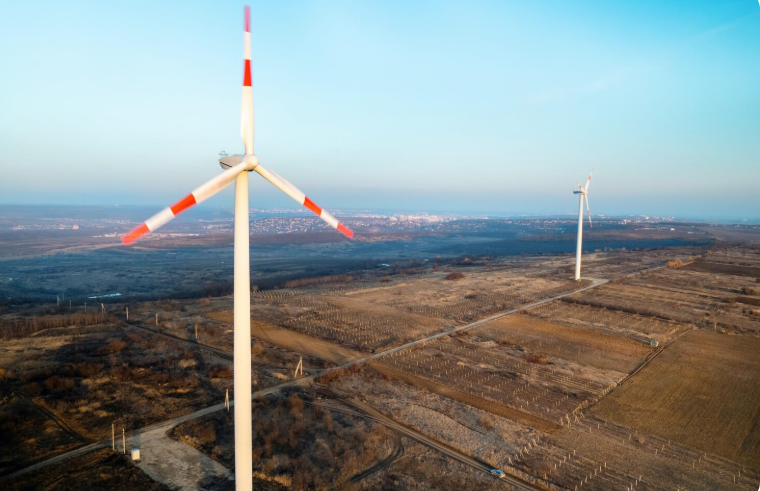
Wind energy is catching up too. India now has over 56 GW of installed wind capacity, with 6.05 GW added in FY 2025–26 — the highest ever in a single year for wind. The country is targeting 99.9 GW of wind capacity by 2029–30, with dedicated task forces now working to cut through land, regulatory, and grid bottlenecks that have slowed wind development historically.
The Manufacturing Leap
India’s renewable energy story is not just about installing capacity — it is increasingly about building it at home.
India’s solar module manufacturing capacity surged from 38 GW in March 2024 to 74 GW by March 2025. Solar cell manufacturing capacity jumped from 9 GW to 25 GW in the same period — a near-tripling in twelve months, driven by the government’s push for domestic production and reduced dependence on Chinese imports.
This matters beyond just energy. A domestic solar manufacturing industry means jobs — in factories in Gujarat, Rajasthan, and Tamil Nadu. It means supply chain security. And it means India can export technology and components to the world rather than simply importing them.
Adani Green Energy, Tata Power Solar, Waaree Energies, and a growing ecosystem of mid-size manufacturers are investing in this space at a scale that would have seemed implausible five years ago. The Production Linked Incentive (PLI) scheme for solar modules has been a significant catalyst, drawing both domestic and international capital into Indian manufacturing.
Apple has also joined the story — the company’s investment in India’s renewable energy infrastructure, estimated in the hundreds of millions of dollars, focuses on solar and wind projects that support its goal of powering its Indian manufacturing operations entirely on clean energy.
What Comes Next: The 500 GW Target
India has committed to reaching 500 GW of non-fossil fuel capacity by 2030. With 283.46 GW already installed as of March 2026, that means achieving roughly another 217 GW in four years — a challenging but increasingly credible goal given the pace of the last twelve months.
Several developments will determine whether India hits that target.
Green Hydrogen is the next frontier. The National Green Hydrogen Mission positions India as a potential global hub for green hydrogen production and export — using renewable energy to produce hydrogen that can replace fossil fuels in hard-to-decarbonise industries like steel and shipping. It is early days, but the policy framework is in place and investment is beginning to flow.
Battery storage is the critical enabler that solar and wind cannot do without. Renewable energy is intermittent — the sun doesn’t always shine, the wind doesn’t always blow. Large-scale battery storage projects, which are now being developed across India, are what will allow renewable generation to provide reliable baseload power rather than just supplemental capacity.
Grid upgrades are quietly urgent. Adani Energy Solutions recently bagged a ₹25,000 crore order for the Bhadla-Fatehpur High Voltage Direct Current (HVDC) project — the kind of transmission infrastructure that allows solar power generated in Rajasthan’s deserts to reach Maharashtra’s cities. Without grid investment at this scale, generation capacity alone cannot deliver results.
The Small Hydro Power Scheme (2026–31), approved by the Union Cabinet with an outlay of ₹2,584 crore, will also add roughly 1,500 MW of distributed capacity — particularly important for hilly states and the Northeast, where grid connectivity remains limited.
Why This Matters Beyond Energy
India’s renewable energy boom is not just an electricity story. It is an economic story, a jobs story, a geopolitical story, and a climate story all at once.
On economics: India’s energy demand is projected to reach 15,820 TWh by 2040. Meeting that demand domestically through renewable energy rather than imported coal and oil is a fundamental question of economic sovereignty — reducing the foreign exchange drain and the vulnerability to global commodity price shocks.
On jobs: The clean energy transition is already creating employment at scale — in manufacturing, installation, operations, and maintenance. The YouTube creator ecosystem analogy applies here too: this is not a single industry. It is a platform on which dozens of adjacent industries are being built.
On climate: India is the world’s third-largest emitter of greenhouse gases. Its choices on energy over the next decade will have consequences that go well beyond its borders. The fact that it is hitting milestones ahead of schedule is genuinely significant for global climate targets.
The story of India’s renewable energy transformation is still being written. But the opening chapter — 283 GW, third in the world, 50% milestone cleared ahead of schedule — is already more remarkable than most people expected.