
When most people hear the name Hachimura, their mind goes straight to Rui — the 6-foot-8 Los Angeles Lakers forward who made history as the first Japanese first-round NBA draft pick. But there’s another Hachimura quietly building something remarkable, far from the hardwood floors and camera flashes.
Her name is Amina Hachimura. And her story is worth knowing on its own terms.
Who Is Amina Hachimura?
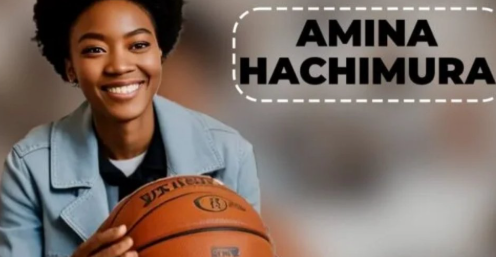
Amina Hachimura is a Japanese-Beninese graphic designer, student artist, and the younger sister of NBA star Rui Hachimura. Born in 2000 in Toyama, Japan, she grew up in the same household that shaped one of basketball’s most intriguing international talents — but the paths the two siblings chose couldn’t be more different.
While Rui found his calling on the court, Amina found hers through creativity. She is currently studying at Boston University in the United States, where she pursues graphic design and visual art, sharing glimpses of her work under the Instagram handle @_ahamity.
She is not chasing the spotlight. She is not trading on her brother’s name. She is doing something harder — building an identity that is entirely her own.
Family Background: Two Worlds, One Story
To understand Amina, you have to understand where she comes from.
Her father, Zakari Jabil, emigrated from Benin in West Africa. Her mother, Makiko Hachimura, is Japanese. Growing up biracial in Toyama — a mid-sized city on Japan’s Sea of Japan coast, not exactly a multicultural hub — meant navigating questions of identity from a young age. Japan’s social fabric, while deeply rich, has not always been welcoming to children who don’t fit neatly into one box.
Amina has spoken about this through her art rather than through interviews. She once compared her identity to the woven surface of a tatami mat — structured, layered, made of different materials that only hold together because of how they are interlaced. It is the kind of insight that tells you more about a person than any biography could.
The Hachimura household, by all accounts, was built on discipline, warmth, and mutual support. Rui has spoken publicly about how tightly knit the family is. Amina’s own life reflects the same values — a seriousness of purpose, a commitment to craft, and a preference for substance over visibility.
She has two brothers: Rui, the older, and Aren, the younger. The three siblings share a close bond that has been evident in the way they speak about each other publicly — or in Amina’s case, in the rare glimpses she allows through social media.
Education: Boston University and the Design Path
Amina made the significant leap from Japan to the United States to pursue her education — a move that brought with it all the pressures of cultural adjustment, academic rigor, and the particular challenge of being a foreigner navigating American campus life while also being the sister of someone famous.
She chose Boston University, one of the country’s respected research universities, and enrolled in a program connected to graphic design and visual arts. For someone whose creative interests are rooted in identity, cultural heritage, and personal expression, the decision makes sense. Graphic design gave her a language — one that sits at the intersection of aesthetics and meaning — to say things that are difficult to put into words.
Her social media, sparse as it is, reflects this. When she posts her work, it tends to be thoughtful rather than performative. Projects that play with pattern, color, and cultural symbolism. The kind of work that you look at twice.
International student life in the US is not glamorous. It is visa paperwork and homesickness and figuring out how to build a life in a country where you don’t know the shortcuts. Amina has navigated that while also managing the quiet complexity of being associated with a famous name in a country where NBA culture is everywhere. That takes a particular kind of groundedness.
Art, Design, and Finding Her Creative Voice
What makes Amina genuinely interesting — beyond the family connection — is the seriousness with which she approaches her creative work.
Graphic design in 2026 is both more accessible and more competitive than it has ever been. AI tools can generate images in seconds. Every college student with a laptop calls themselves a designer. Standing out requires not just technical skill but a genuine point of view — a reason why your work looks the way it does, rooted in something real.
Amina has that. Her Japanese-Beninese identity is not just biographical detail. It is design vocabulary. The tension and harmony between Japanese minimalism and West African visual richness — the restraint of one tradition, the exuberance of the other — shows up in how she thinks about form, color, and cultural storytelling.
As detailed in a profile by Scoopmeadow, Amina’s creative journey reflects “a blend of cultural richness, artistic expression, and personal growth,” with her African-Japanese roots directly informing her artistic voice and the themes she explores through graphic design and modeling. She has participated in campaigns that celebrate diversity and representation — work that fits naturally with who she is, rather than work she’s doing for visibility.
She is also a model, though this appears to be an extension of her creative interests rather than a primary career goal. The campaigns she has been associated with center on inclusion and identity — consistent with her broader values.
Identity, Privacy, and the Quiet Strength of Staying Private
One of the most striking things about Amina Hachimura is what she doesn’t do.
She doesn’t give interviews. She doesn’t post constantly. She doesn’t leverage her brother’s NBA fame to build a personal brand. In a culture that rewards oversharing and treats visibility as achievement, she has quietly done the opposite — and it has earned her something rarer than followers: genuine respect.
This is not shyness. People who know her work and follow her creative output describe her as confident and intentional. The privacy is a choice, not a default. She has decided, apparently quite deliberately, that her art will speak for her — and that the space between public and private is hers to control.
For young biracial women navigating identity in between cultures, Amina’s approach carries a quiet message: you don’t have to explain yourself constantly. You don’t have to justify your complexity. You can just make things, and let the work do the talking.
Her brother Rui, for his part, has spoken warmly about his siblings in various interviews. He attended her events when possible, and the mutual support between them comes through in how each talks about family. NBA stardom and Boston University student life are very different worlds — but the Hachimura siblings seem to have figured out how to stay close across that gap.
Amina Hachimura: Quick Facts
| Detail | Information |
|---|---|
| Full Name | Amina Hachimura |
| Date of Birth | 2000 |
| Birthplace | Toyama, Japan |
| Nationality | Japanese |
| Ethnicity | Japanese-Beninese (mixed) |
| Father | Zakari Jabil (from Benin, West Africa) |
| Mother | Makiko Hachimura (Japanese) |
| Siblings | Rui Hachimura (NBA, LA Lakers), Aren Hachimura |
| Education | Boston University, USA |
| Field | Graphic Design, Visual Art, Modeling |
| @_ahamity | |
| Known For | Sister of Rui Hachimura; artist and designer |
Why People Are Searching for Amina Hachimura
Interest in Amina tends to spike whenever Rui Hachimura is in the news — after a Lakers playoff run, a viral game moment, or a feature interview where he mentions family. But the searches are increasingly about Amina herself: her art, her background, what she’s studying, where she lives.
That shift matters. It suggests people are not just looking for trivia about a famous person’s relative. They are genuinely curious about a young woman who has chosen a thoughtful, creative life on her own terms — and who represents something that is becoming more visible in modern culture: the biracial, internationally mobile, creatively driven young adult who refuses to be defined by any single identity category.
In the United States especially, where conversations about mixed heritage, representation, and identity are ongoing and evolving, Amina’s story resonates. She is Japanese and Beninese. She grew up in Japan and studies in Boston. She makes art about who she is. She does it quietly, without asking for validation.
That’s a story people want to read.
What Comes Next
Amina Hachimura is still in her mid-twenties, still in school, still building. What comes next is genuinely open.
She could build a career in graphic design — working for a studio, building a freelance practice, or doing brand creative work that reflects her values around diversity and identity. She could move deeper into modeling, particularly in spaces that center representation. She could go in directions nobody has predicted yet.
What seems certain is that whatever she does, it will be deliberate. Amina Hachimura does not appear to be someone who drifts. She appears to be someone who chooses — carefully, intentionally, and on her own schedule.
Her brother is one of the best basketball players Japan has ever produced. That is extraordinary. But watching Amina build something quieter, and equally serious, in her own field — that’s a different kind of extraordinary.
And it’s worth paying attention to.
Frequently Asked Questions
Amina Hachimura is the younger sister of NBA star Rui Hachimura. Born in 2000 in Toyama, Japan, she is a graphic designer, visual artist, and Boston University student with Japanese and Beninese heritage.
Amina Hachimura was born in 2000, making her 25 years old as of 2026.
She studies at Boston University in the United States, pursuing graphic design and visual arts.
Amina is of mixed Japanese and Beninese descent. Her mother, Makiko Hachimura, is Japanese, and her father, Zakari Jabil, is from Benin in West Africa.
She maintains a low-key Instagram presence under the handle @_ahamity, where she occasionally shares her artwork and design projects.
Yes, alongside her design work, Amina has participated in modeling campaigns centered on diversity and cultural representation.